
SUMA, Fintech Product Design for Financial Clarity and Behavior Change
A fintech experience that blends financial tracking with education to drive better money habits
SUMA is a personal finance and education mobile app designed to help users understand, control, and improve their financial health. I led the UX and product design across the core financial app and its educational ecosystem, Sumaversity, shaping onboarding, dashboards, learning flows, and gamification systems that support long-term behavior change in a high-trust financial context.
Client
SUMA Wealth
Services
Visual Design UI & UX Design
Industries
Fintech & E-learning
Date
Dec 2025
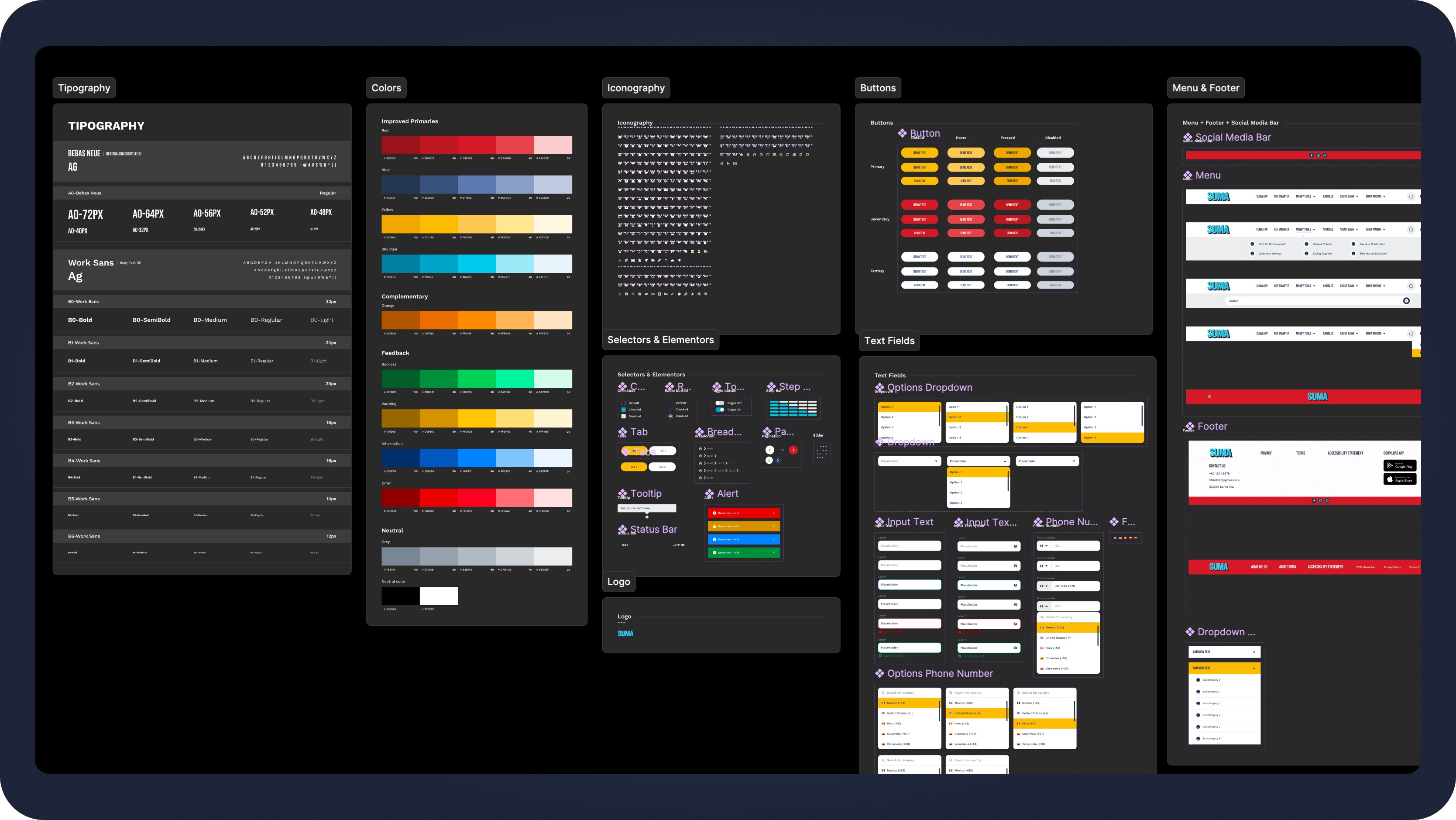
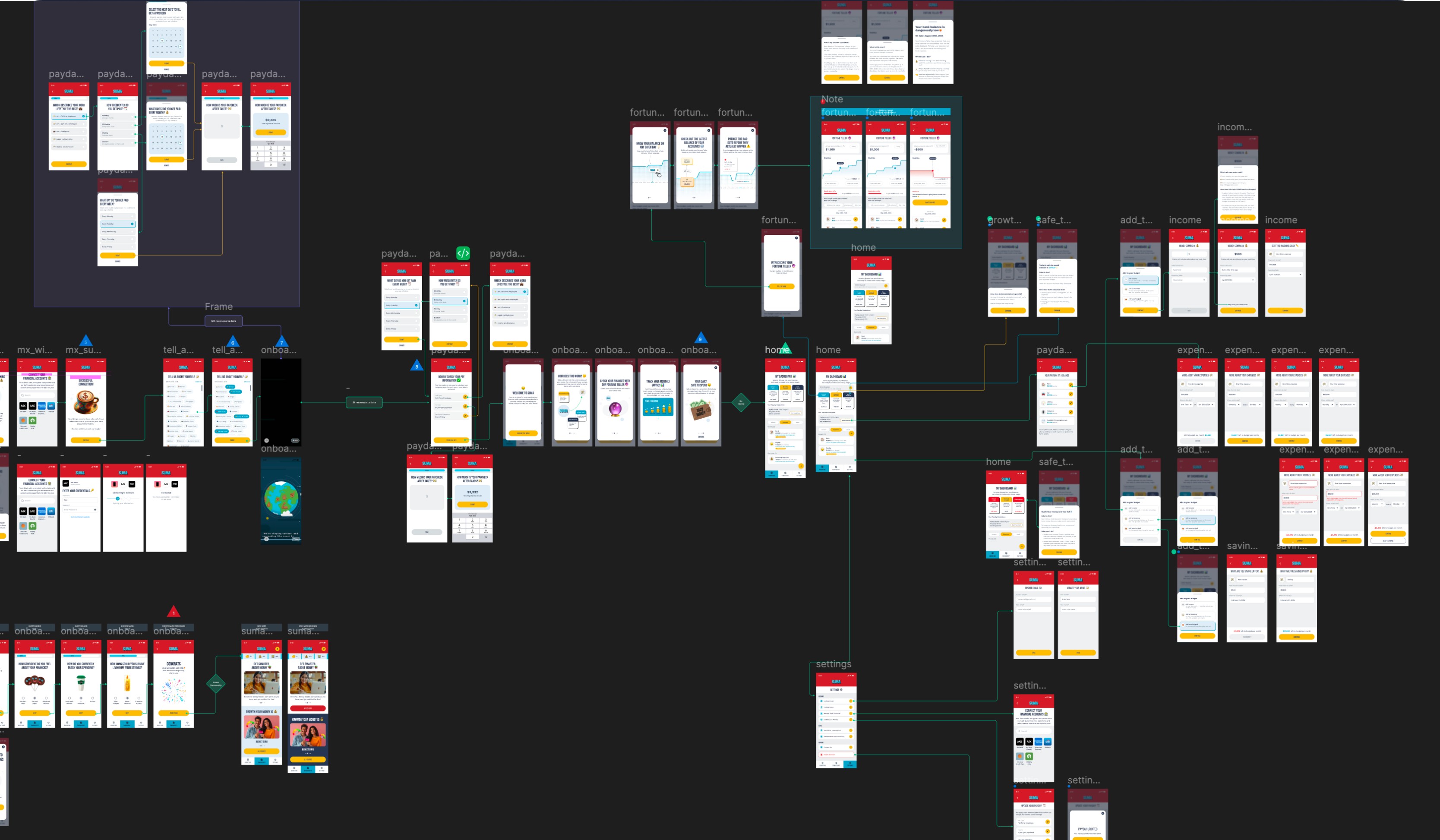
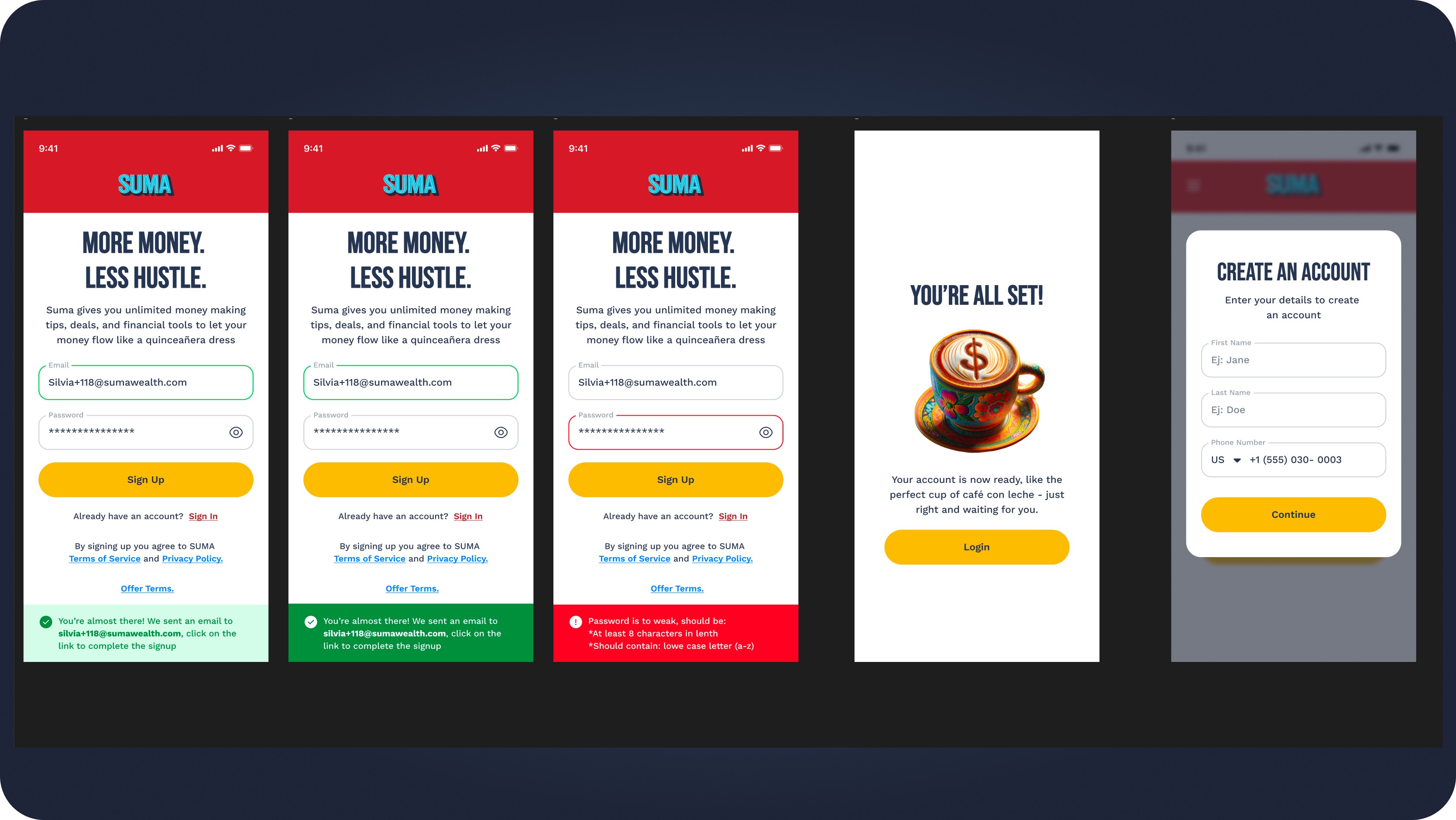
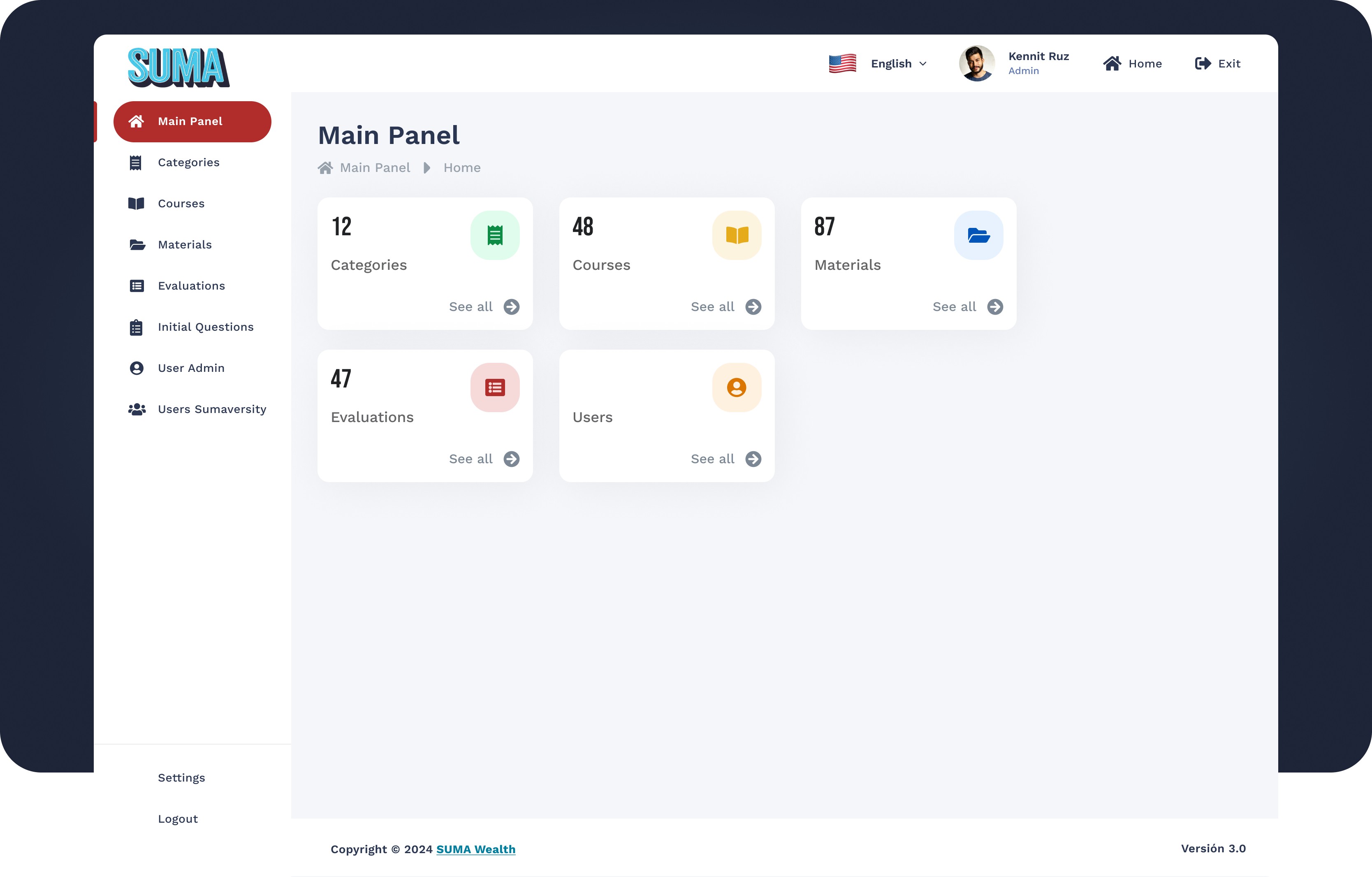
Project summary SUMA was built to solve a common failure in personal finance products: users see their numbers, but they do not understand them, trust them, or know what to do next. The product combines a financial tracking app with an integrated learning platform that helps users build financial confidence over time. My work focused on designing end-to-end experiences that balance clarity, transparency, motivation, and automation. This included core financial flows, educational onboarding, administrative dashboards, and conversion-focused landing pages, all aligned under a single product vision. The problem we set out to solve Most financial apps overwhelm users with complex dashboards, unclear terminology, and forced early bank connections. This creates anxiety, drop-off, and distrust, especially among users who are just starting to manage their finances. SUMA aimed to solve three critical user questions at every moment: • Where does my money stand right now? • What should I do next? • How can I improve without feeling overwhelmed or judged? Designing for these questions required combining financial UX, behavioral psychology, and education in a single cohesive system. Team collaboration SUMA was developed through close collaboration between design, product, and engineering: • I worked directly with product leadership to define onboarding strategy, feature prioritization, and long-term roadmap decisions. • I collaborated with engineering teams to design flows that respected security, data integrity, and automation constraints. • Frequent alignment sessions ensured that UX decisions supported user trust while remaining viable from a business and technical perspective. • Stakeholder feedback loops helped refine interaction clarity, microcopy tone, and progressive disclosure across the app. This collaboration ensured that design decisions scaled beyond screens and supported the product as a system. What I focused on My work on SUMA centered around several strategic UX pillars: Trust-first onboarding Users can enter the app without connecting their bank accounts and access Sumaversity immediately. This reduced early friction and allowed users to experience value before sharing sensitive data. Progressive financial dashboards Financial data was structured using clear hierarchy and progressive disclosure, helping users focus on what matters without cognitive overload. Action-oriented insights Instead of passive data, the interface highlights guidance and next steps, encouraging users to act with confidence. Integrated financial education Sumaversity was designed as a core product layer, not a separate feature. Micro-courses, certificates, and learning paths support better financial decisions inside the app. Gamification beyond learning A phased gamification system was designed across the entire app, including streaks, XP, achievements, levels, commitment cards, and long-term progression mechanics inspired by habit-forming products. Design decisions that drove impact One key decision was allowing users to skip bank connection during onboarding. This increased trust and reduced early abandonment while still encouraging connection later through contextual value. Another critical decision was showing sample financial data to users who had not connected accounts. This preview helped users understand the product’s value and reduced uncertainty. Treating education as a core UX layer through Sumaversity shifted the product from a tracking tool to a financial improvement companion. Learning was tied directly to actions, not isolated content. Finally, designing onboarding tutorials using multiple patterns such as coach marks, slide tutorials, and interactive tasks ensured users learned by doing rather than reading.
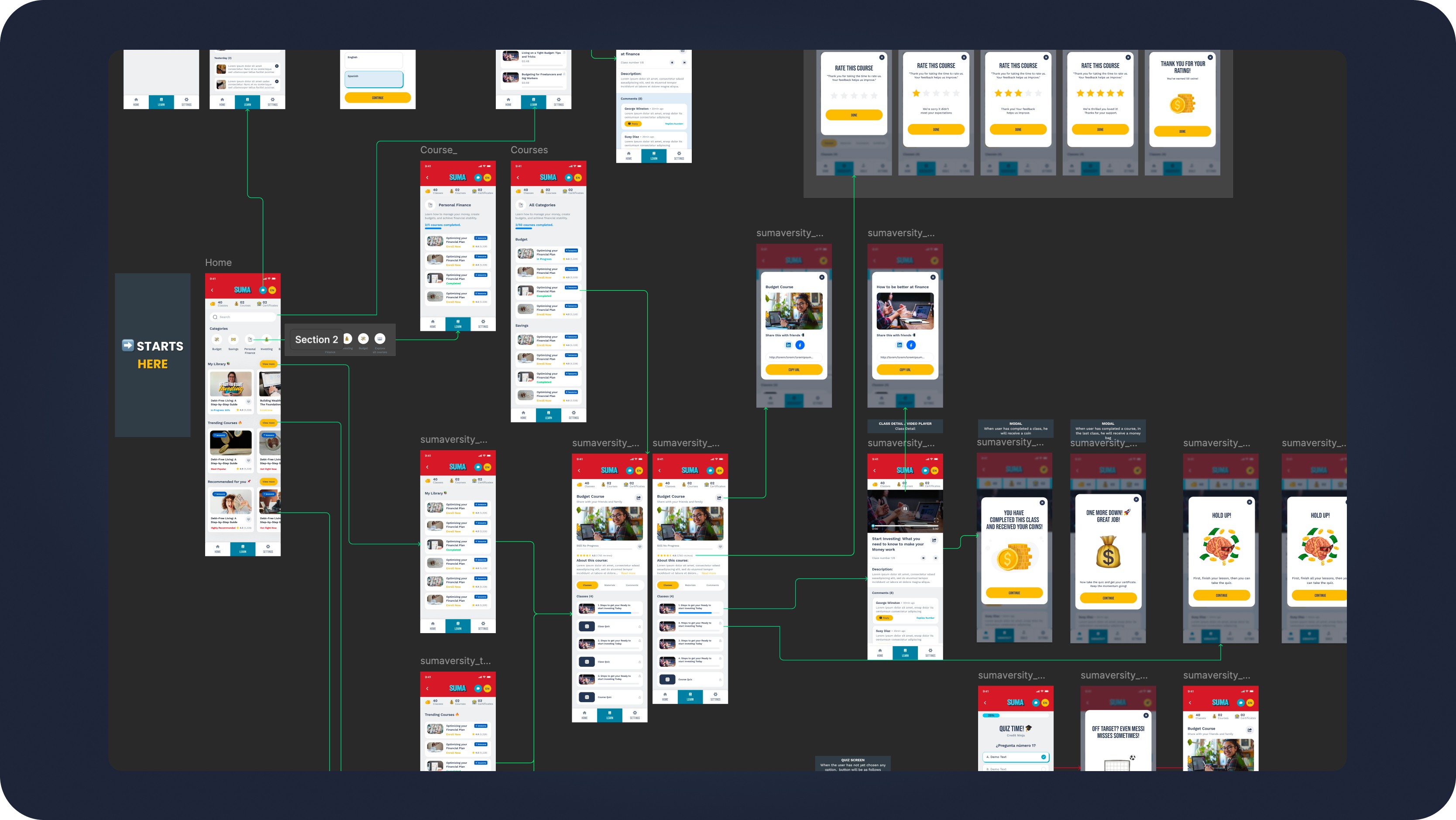
How we validated our work Design decisions were validated through internal testing, qualitative feedback, and behavioral indicators: • Onboarding completion increased by an estimated 35 percent after introducing optional bank connection. • Users reported higher clarity and confidence when interacting with simplified dashboards compared to earlier dense layouts. • Engagement with educational content increased steadily when courses were linked to real financial actions. • Gamification elements correlated with more consistent weekly usage and habit formation. • Course completion flows with rating modals improved feedback participation and course quality insights. These signals confirmed that trust, clarity, and motivation were essential drivers of engagement in financial products. Results and outcomes SUMA evolved into a cohesive financial experience that helps users move from confusion to control. The combination of transparent data visualization, optional automation, and integrated education created a product that feels supportive rather than overwhelming. The design system and UX foundations support future expansion into personalized insights, advanced analytics, and scalable educational content without increasing complexity. What we learned This project reinforced that financial UX is deeply emotional. Users need clarity, pacing, and control as much as accuracy. Giving users autonomy and context builds stronger long-term trust than forcing early commitment. It also highlighted the power of combining product design, behavioral psychology, and education to drive sustainable outcomes. Looking forward With the foundation in place, SUMA can expand into smarter automation, personalized financial guidance, deeper analytics, and richer gamification systems while continuing to prioritize accessibility, transparency, and trust.